The First African Woman to Curate Venice Never Saw Her Exhibition Open
by Glory Onyekwusi Apr 2, 2026
Koyo Kouoh was the first African woman to curate the Venice Biennale. She died before her vision opened. In Minor Keys opens May 9, 2026, and her legacy changes African art forever.
In December 2024, the global art world erupted in celebration. Koyo Kouoh had become the first African woman ever appointed to curate the Venice Biennale, the oldest and most prestigious contemporary art exhibition on earth, founded in 1895 and attended by hundreds of thousands of visitors, collectors, and critics every two years.
For a continent that had spent decades being discussed rather than directing those conversations, it felt like something had fundamentally shifted.
Then, on 10 May 2025, just days before she was due to publicly unveil her exhibition theme, Kouoh died in a hospital in Basel, Switzerland. She was 57. Her cancer had only recently been diagnosed. Artforum
The art world went quiet in a way it rarely does.
This is the story of who she was, what she built, and why the Venice Biennale that opens on 9 May 2026 — titled In Minor Keys — may be the most significant moment in African art history in a generation.
From Cameroon to Dakar to the World
Koyo Kouoh was born in Cameroon on 24 December 1967 and raised in Switzerland. She initially trained in business administration and banking — a fact that surprises people who later came to know her as one of the most intellectually rigorous curators of her era. But it was that grounding in institutional thinking, combined with a deep personal commitment to African cultural life, that made her so formidable.
As a young woman, she travelled to Dakar, Senegal, to interview filmmaker Ousmane Sembène — and never fully left the African cultural world again. Wikipedia
Her early career was built in Dakar, where she coordinated cultural programmes, collaborated with the Dakar Biennale, and co-curated major photography exhibitions across West Africa. In 2008, she founded RAW Material Company — a platform for critical exchange and artistic practice that grew into a full independent art hub hosting residencies, publications, and exhibitions. Artforum
RAW Material Company was not just a gallery. It was a statement. It said that African art did not need to travel to Europe or America to be taken seriously. It could generate its own critical discourse, on its own terms, from Dakar.
Through RAW Material Company, Kouoh promoted residencies, publications, and exhibitions that propelled independent African artists to international recognition — and she mentored a generation of curators, especially women, who are now carrying that work forward. Welcomeafrica
Rebuilding Africa’s Largest Museum
In 2019, Kouoh took on what many considered an impossible task.
Zeitz Museum of Contemporary Art Africa — Africa’s largest museum, built around philanthropist Jochen Zeitz’s collection and opened in Cape Town in 2017 — was in crisis. Its founding director had been dismissed following accusations of misconduct. When Kouoh arrived, morale was described as low and the exhibitions as lackluster. Wikipedia
What she did over the next six years was nothing short of a complete institutional transformation.
She sharpened the museum’s curatorial focus, expanded its research collaborations, deepened its engagement with local artistic communities, and repositioned it as a critically engaged institution responding directly to the socio-political realities of Africa and its diaspora. The Neo Art Magazine
She introduced what she called “Black geographies” as a curatorial framework — a term she used to describe all the parts of the world where African and Afro-diasporic cultures had been transported, often involuntarily, but where they had evolved, transformed, and taken root. Wikipedia It was a framework that expanded the scope of African art history beyond the continent’s borders without erasing where it came from.
Her landmark exhibition When We See Us: A Century of Black Figuration in Painting, mounted at Zeitz MOCAA in 2022, became a defining cultural event. It was the largest exploration of Black self-representation and subjectivities in painting ever assembled Artnet News — and it travelled internationally, bringing African-led curatorial thinking to audiences across Europe and beyond.
In 2020, she received the Grand Prix Meret Oppenheim — Switzerland’s most prestigious award for achievement in art, architecture, criticism, and exhibitions. Independent Curators International. From 2014 to 2022, she was named annually among the 100 most influential people in the contemporary art world by ArtReview.
The Venice Appointment and the Loss
When the Venice Biennale announced Kouoh’s appointment as curator of its 61st edition in December 2024, the response from the African art world was immediate and emotional. This was not simply a personal achievement. It was a statement about whose voices belonged at the centre of the global art conversation.
She got to work immediately — selecting artists, developing commissions, building out the spatial design, and writing the curatorial framework that would guide the entire exhibition. Between October 2024 and early May 2025, she submitted a comprehensive proposal outlining the exhibition’s theoretical framework, artist selections, spatial design, visual identity, and catalogue contributions. Africans Column
Then cancer intervened, swiftly and without warning.
Her husband confirmed the diagnosis had come very recently. She died on 10 May 2025, ten days before she was due to stand in Venice and reveal her theme to the world.
In Minor Keys: A Vision That Outlived Its Author
What happens when a vision is bigger than one life?
The Venice Biennale answered that question decisively. The Biennale announced it would move forward with Kouoh’s exhibition exactly as she had conceived it, guided by a team of five advisers she had herself selected. Artnews
The exhibition is titled In Minor Keys.
As Kouoh wrote in her own curatorial text: “The minor keys refuse orchestral bombast… the minor keys ask for listening that calls on the emotions and sustains them in return.” Artnews
It is a quiet, profound, and deeply African idea. Not spectacle. Not dominance. Listening. Feeling. Slowing down enough to hear what has always been there.
The exhibition will feature 111 artists and collectives, with a strong focus on practitioners from the Global South. The thematic motifs include Shrines, Procession, Schools, Enchantment, Rest, the Threshold, and the Creole Garden. The Art Newspaper
The opening programme will include a procession of poets — a direct reference to a Poetry Caravan that Kouoh herself once led between Dakar and Timbuktu. Artnews Even in its live events, the Biennale will carry the imprint of her life.
Alongside the main exhibition, 12 African countries will present national pavilions — a reflection of the continent’s expanding institutional presence at the world’s most influential art event. Africans Column
What She Hoped Her Appointment Would Mean
In an article published posthumously in The Guardian, Kouoh addressed the historic nature of her Venice appointment directly and characteristically refused to make it only about herself.
“Ultimately, my role as the first African woman to curate the Biennale is not about personal legacy. While I recognise the significance of being the first African woman to hold this position, I hope my appointment sets a precedent rather than becoming an exception.” Wikipedia
That line carries everything. The generosity of it. The urgency. The quiet insistence that one breakthrough, however historic, is never enough.
She did not want to be the exception. She wanted to be the opening.
The Legacy She Built Brick by Brick
It would be easy, in grief, to reduce Koyo Kouoh to a single achievement — the Venice appointment, the glass ceiling broken. But her actual legacy is far more layered and far more durable than that.
She built RAW Material Company from nothing in Dakar into one of Africa’s most important independent art institutions. She took Zeitz MOCAA from crisis to continental leadership. She contributed to Documenta 12 and 13 — two of the most important international exhibitions of the 21st century. She helped shape the curatorial programme of the 1-54 Contemporary African Art Fair and curated EVA International, Ireland’s biennial, in 2016. ART AFRICA Magazine
She championed artists whose names are now internationally recognised — Abdoulaye Konaté, Otobong Nkanga, Johannes Phokela, and Tracey Rose, among them — at moments when their work was still finding its global audience.
And she mentored the next generation. Quietly, persistently, with the kind of investment in people that does not make headlines but shapes entire careers.
Conclusion
In Minor Keys opens on 9 May 2026 in Venice. It will be seen by hundreds of thousands of people. Critics will write about it. Collectors will respond to it. The artists whose work it platforms will find new audiences.
Koyo Kouoh will not be there to see it. But her thinking will be in every room.
The real question her life poses to the African art world is not whether her Biennale will succeed; it will. The question is whether the institutions, the funders, the governments, and the art world at large will honour what she was actually asking for.
Not a single historic first. Not one exceptional woman was elevated as proof that the system works.
A precedent. A new normal. A generation of African curators, thinkers, and institution-builders who never have to be the first again.
That is what she built her life toward. And that work, unlike her life, is far from finished.
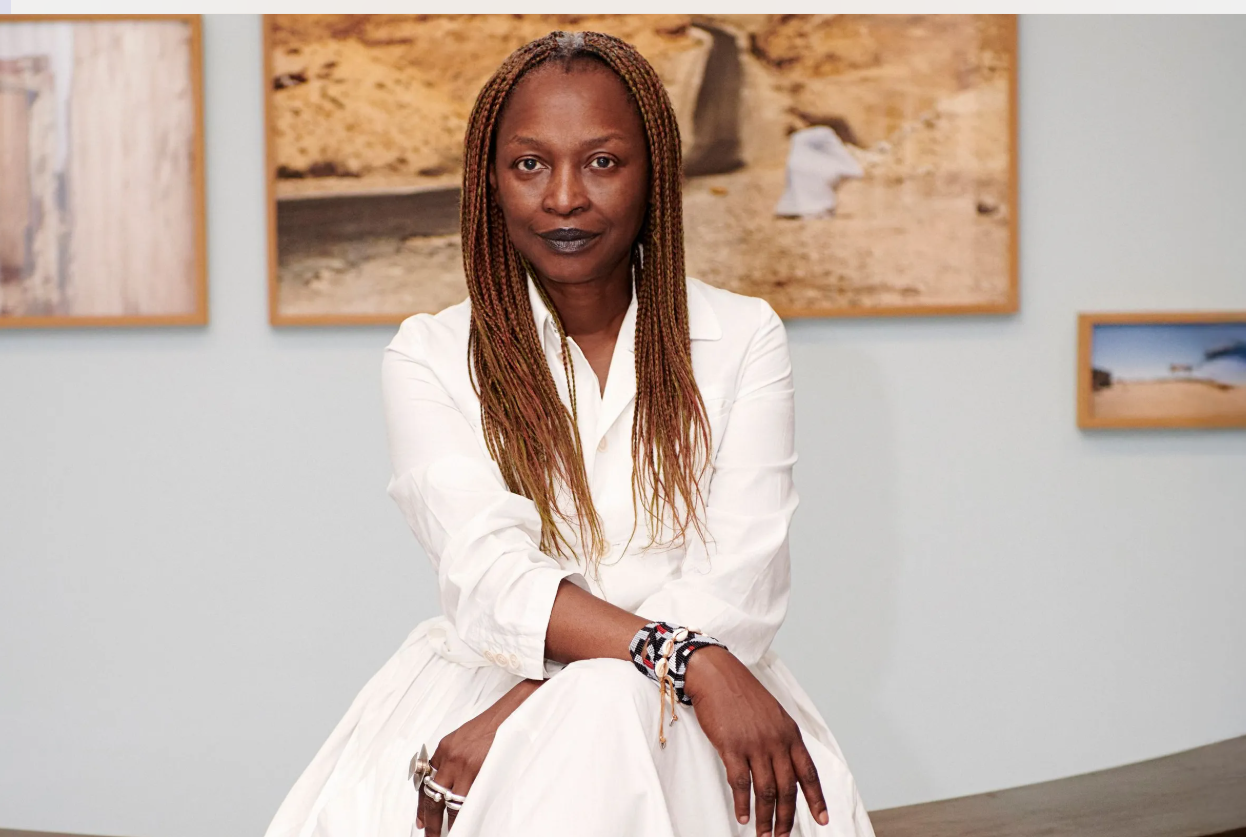
Image Credit: Koyo Kouoh. Courtesy La Biennale di Venezia. Photo: Mirjam Kluka.