Remembering Anarcha: Black Women, Medical Experimentation, and the Foundations of Modern Gynecology
by Glory Onyekwusi Feb 9, 2026
The history of modern medicine is inseparable from the social and political contexts in which it developed. In the United States, nineteenth-century medical advancement was deeply entangled with slavery, racial hierarchy, and the systematic exploitation of Black bodies. One of the most significant and troubling examples of this entanglement is the story of Anarcha, an enslaved Black teenager whose suffering played a central role in the development of modern gynecology.
Enslavement and Medical Experimentation in the 19th Century
During the 1840s, enslaved people in the American South were frequently used as subjects for medical experimentation. Because enslaved individuals were legally considered property, physicians could perform procedures without consent, oversight, or ethical accountability (Washington, 2006). Enslaved women, in particular, were vulnerable to gynecological experimentation due to both their reproductive labor and prevailing racialized beliefs about Black bodies.
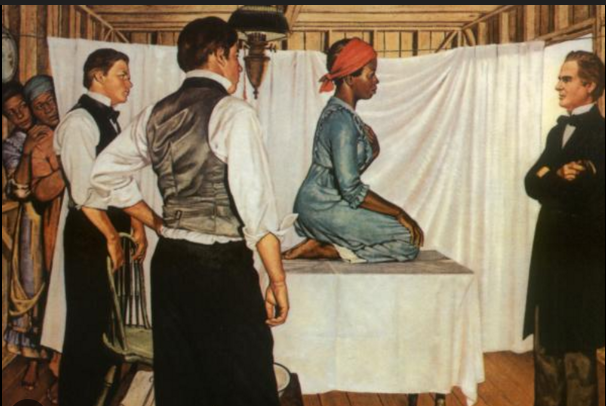
Anarcha was one such woman. Enslaved in Alabama, she suffered from vesicovaginal fistula, a severe childbirth injury that causes chronic urinary incontinence. At the time, fistulas were poorly understood and difficult to treat. Dr. J. Marion Sims, a physician seeking to develop a surgical repair for the condition, began experimenting on enslaved women who had fistulas, including Anarcha, Lucy, and Betsey (Owens, 2017).
Between approximately 1845 and 1849, Sims performed more than thirty surgical operations on Anarcha alone. These procedures were conducted without anesthesia, despite the fact that ether anesthesia was already in use for surgical operations by 1846 (Wall, 2006). Sims later claimed that anesthesia was unnecessary, a position supported by the racist belief—common among nineteenth-century physicians—that Black people experienced pain differently or less intensely than white people (Hogarth, 2017).
Racialized Assumptions and Medical Theory
The assumption that Black people were biologically less sensitive to pain was not an isolated belief but a foundational component of racial science in the nineteenth century. Physicians and anatomists routinely asserted that Black bodies were physiologically distinct, using pseudoscientific claims to justify enslavement, forced labor, and medical abuse (Byrd & Clayton, 2001).
These beliefs allowed Sims and others to frame experimentation on enslaved women as both acceptable and necessary. Although Sims acknowledged Anarcha and the other women by name in his writings, he did not recognize them as patients with autonomy or consent. Instead, they were described as surgical subjects whose suffering was subordinated to medical progress (Sims, 1884).
The surgical technique Sims ultimately perfected would later be used to treat white women suffering from fistulas, earning him international recognition and cementing his legacy within medical institutions.
Erasure and Legacy in Modern Healthcare
For much of the twentieth century, Sims was celebrated as the “father of modern gynecology,” while the enslaved women whose bodies enabled his discoveries were largely excluded from public memory. This selective remembrance reflects a broader pattern in which medical achievements are detached from the ethical violations that made them possible (Gamble, 1997).
The consequences of this history are not merely symbolic. Contemporary research demonstrates persistent racial disparities in healthcare outcomes that disproportionately affect Black women. In the United States, Black women are nearly three times more likely to die from pregnancy-related causes than white women (Centers for Disease Control and Prevention, 2023). Studies also show that Black patients are less likely to receive adequate pain treatment, even when presenting with similar symptoms as white patients (Hoffman et al., 2016).
Scholars argue that these disparities are rooted, in part, in the same racial myths that justified experimentation on enslaved women—particularly the belief that Black pain is exaggerated, tolerable, or biologically different (Owens, 2017).
Public Reckoning and the Mothers of Gynecology Monument
In recent years, historians, activists, and artists have sought to correct the historical record and challenge the uncritical celebration of figures like Sims. Statues honoring Sims have been removed or relocated in several cities, including New York, following public debate about his legacy.
In 2021, artist Michelle L. Browder, working with Deborah Shedrick and a collaborative team, unveiled The Mothers of Gynecology monument in Montgomery, Alabama. The approximately eleven-foot-tall sculpture, constructed from found metal objects, honors Anarcha, Lucy, and Betsey by name. Rather than celebrating medical triumph, the monument centers the women whose coerced suffering underpinned those advances.
The monument represents a broader shift in how medical history is being remembered—one that emphasizes accountability, ethical reflection, and the recognition of marginalized contributors. Scholars of public memory note that such interventions are critical to reshaping narratives that have long privileged innovation over justice (Savitt, 2007).
Conclusion
Remembering Anarcha requires more than acknowledgment of past injustice. It demands a sustained examination of how medical knowledge has been produced, whose bodies have borne the cost of progress, and how those legacies continue to shape healthcare today.
By situating Anarcha, Lucy, and Betsey at the center of gynecological history, contemporary scholarship and public memorials challenge the notion that progress is neutral or inevitable. Instead, they reveal medicine as a human enterprise one shaped by power, inequality, and ethical choices that continue to matter.
Image or thumbnail source- Illustration of Dr. J. Marion Sims with Anarcha by Robert Thom. Anarcha was subjected to 30 experimental surgeries.
Pearson Museum, Southern Illinois University School of Medicine
References
Byrd, W. M., & Clayton, L. A. (2001). An American Health Dilemma: Race, Medicine, and Health Care in the United States, 1900–2000. Routledge.
Centers for Disease Control and Prevention. (2023). Racial and Ethnic Disparities in Pregnancy-Related Deaths.
Gamble, V. N. (1997). Under the shadow of Tuskegee: African Americans and health care. American Journal of Public Health, 87(11), 1773–1778.
Hoffman, K. M., Trawalter, S., Axt, J. R., & Oliver, M. N. (2016). Racial bias in pain assessment and treatment recommendations. Proceedings of the National Academy of Sciences, 113(16), 4296–4301.
Hogarth, R. A. (2017). Medicalizing Blackness: Making Racial Difference in the Atlantic World, 1780–1840. University of North Carolina Press.
Owens, D. C. (2017). Medical Bondage: Race, Gender, and the Origins of American Gynecology. University of Georgia Press.
Savitt, T. L. (2007). Race and medicine in nineteenth- and early-twentieth-century America. Bulletin of the History of Medicine, 81(3), 631–641.
Sims, J. M. (1884). The Story of My Life. D. Appleton and Company.
Washington, H. A. (2006). Medical Apartheid: The Dark History of Medical Experimentation on Black Americans from Colonial Times to the Present. Doubleday.
Wall, L. L. (2006). The medical ethics of Dr. J. Marion Sims: A fresh look at the historical record. Journal of Medical Ethics, 32(6), 346–350.