Aksum: The Ancient East African Empire That Shaped Art and Culture
by Glory Onyekwusi Nov 24, 2025
The Kingdom of Aksum, located in what is now northern Ethiopia and Eritrea, was one of Africa’s most advanced ancient civilizations. From the 1st to the 7th century CE, Aksum thrived as a center of trade, art, and culture, leaving a legacy still visible today in its monuments, coins, and religious art. Understanding Aksum helps us appreciate the deep history of African creativity and its influence on modern art.
A Hub of Trade and Commerce
Aksum’s strategic location connected the interior of East Africa to the Indian Ocean trade network. Its port city of Adulis welcomed merchants from Rome, India, Persia, and Arabia, exchanging goods such as ivory, gold, and spices for textiles, glass, and ceramics.
Evidence of Aksum’s prosperity appears in urban centers along trade routes, including Matara, Qohayto, Kaskase, and Tekondo. Excavations reveal palaces, temples, stone platforms, and elaborate tombs, highlighting a society that was both organized and affluent.
Coins: The Kingdom’s Economic and Political Voice
Aksumite kings were pioneers in minting their own currency, issuing coins in gold, silver, bronze, and iron from the 2nd century CE onward. Each coin bore the king’s portrait and inscriptions in Greek and Ge’ez, reflecting the kingdom’s international reach and local identity.
These coins circulated far beyond Aksum, reaching southern Arabia and India, and played a dual role: facilitating trade and communicating political and religious messages. When King Ezana adopted Christianity in the 4th century CE, coins began to feature the Christian cross, signaling a significant cultural shift.
King Ezana and the Rise of Christianity
King Ezana’s conversion to Christianity marked one of the earliest state adoptions of the religion in world history. Influenced by the missionary Frumentius, Ezana reshaped Aksum’s cultural landscape. Churches replaced older temples, coins carried crosses, and religious art became central to society.
This fusion of religion, culture, and art created a distinct Aksumite identity, blending local traditions with influences from the wider Christian Mediterranean world.
Architecture, Daily Life, and Material Culture
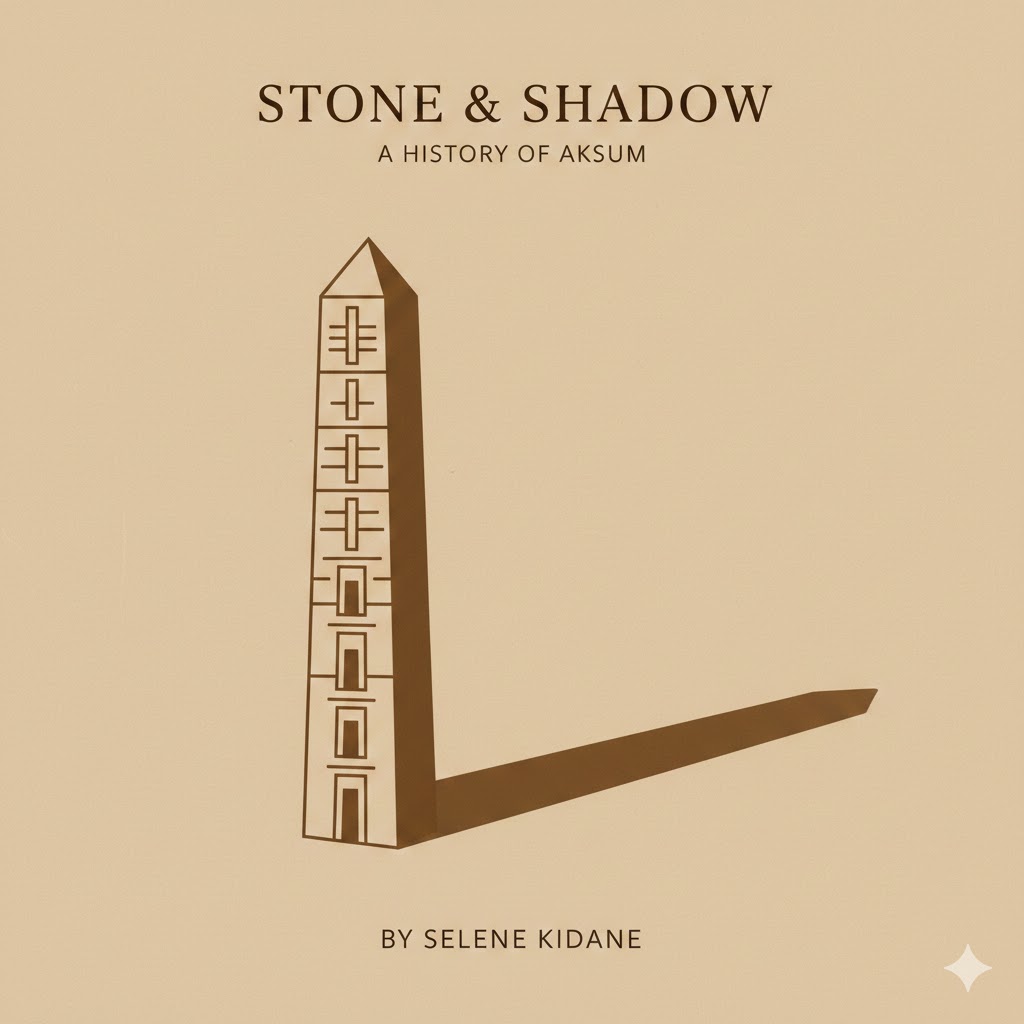
Beyond stelae and coins, Aksumite cities featured palaces, water systems, roads, and marketplaces, demonstrating a high level of organized urban planning. Tombs were elaborate, often featuring stone sarcophagi and ceremonial platforms.
Art and architecture were deeply influenced by religion. Following Christianity’s adoption, illuminated manuscripts, crosses, and church carvings integrated Aksumite motifs, preserving a visual language that persists in Ethiopian art today.
Aksum’s Lasting Influence on African Art
Aksum’s achievements prove that African civilizations were highly sophisticated, producing architecture, inscriptions, and material culture long before European contact. Modern artists continue to draw inspiration from Aksum’s geometric motifs, stelae designs, and symbolic carvings.
Collecting or engaging with Aksum-inspired art today means participating in a centuries-old tradition, connecting past and present, and supporting living artisans who carry forward this legacy.
Why Aksum Matters Today
Aksum’s story addresses several important themes:
Cultural continuity: Its art preserves historical identity and knowledge.
Innovation and skill: Aksumite craftsmanship set high standards in engineering and design.
Global influence: Its trade networks and coinage demonstrate Africa’s historical connectivity.
For collectors and art enthusiasts, Aksum is a reminder that African art is deeply historical, sophisticated, and culturally significant. Every piece inspired by Aksum tells a story of innovation, faith, and creativity — a story that continues to inspire African art today.