Afroblue at Fondation Blachère Explores Memory, Blackness, and Diasporic Imagination Through Color
by Glory Onyekwusi May 27, 2026
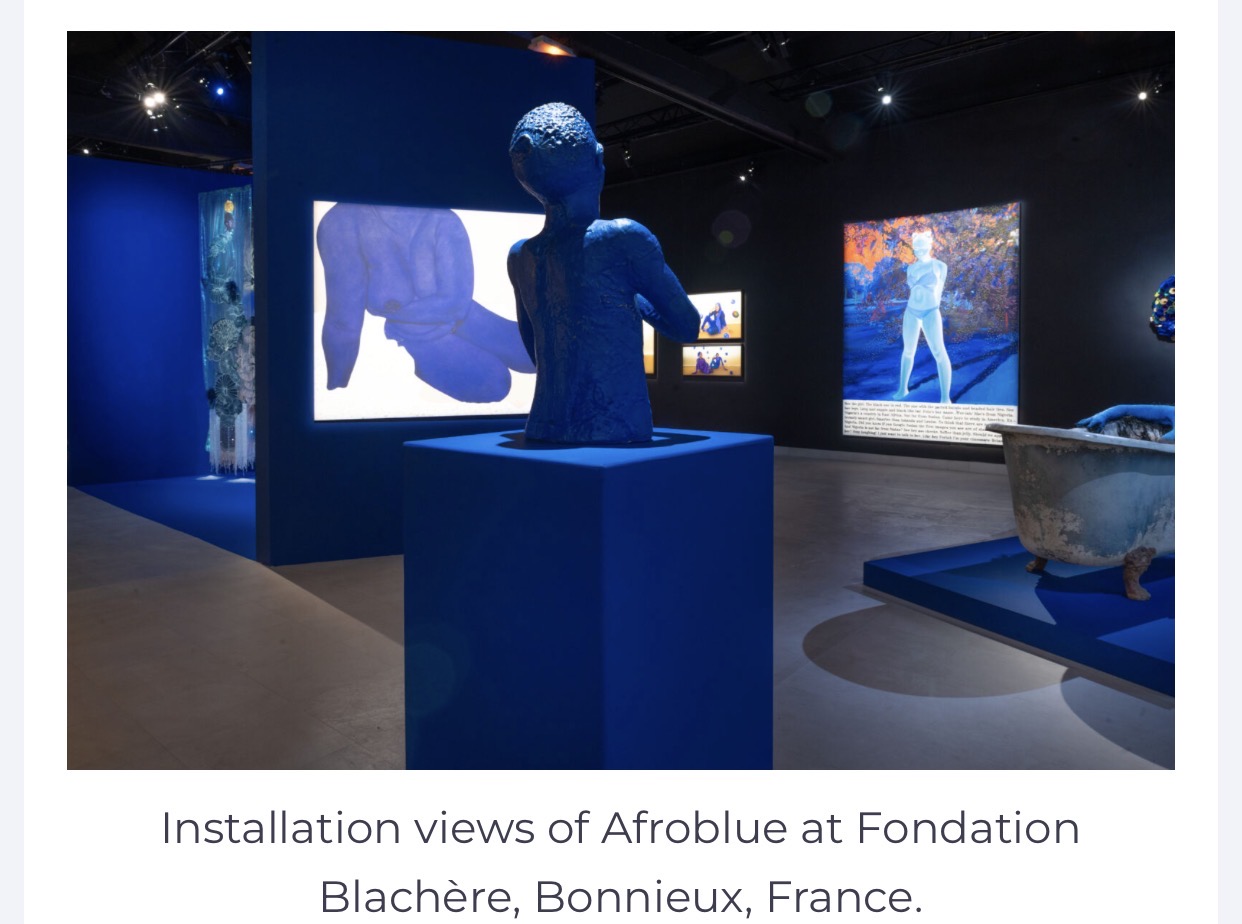
Currently on view at Fondation Blachère in Bonnieux, France, Afroblue brings together 36 artists from across Africa and its diasporas in an expansive exhibition examining the emotional, symbolic, spiritual, and political dimensions of the color blue within contemporary artistic practice.
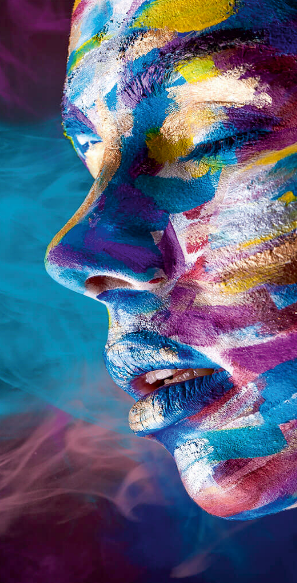
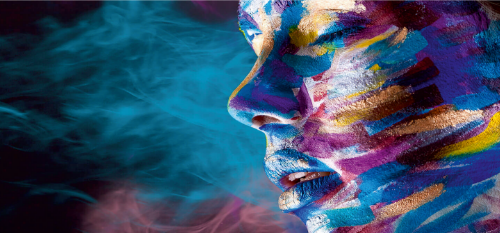
Running from April 9 to September 19, 2026, the exhibition transforms Fondation Blachère’s Gare de Bonnieux into a layered space of reflection where color operates not simply as an aesthetic device, but as a conceptual and emotional language. Across painting, sculpture, installation, textiles, photography, and mixed media, blue becomes a shifting presence tied to memory, migration, Blackness, spirituality, intimacy, landscape, and imagination.
Rather than approaching blue as a fixed symbol, Afroblue allows the participating artists to construct highly individual relationships to the color. The result is an exhibition that feels simultaneously intimate and collective, poetic and political.
Blue as Atmosphere, Archive, and Emotional Terrain
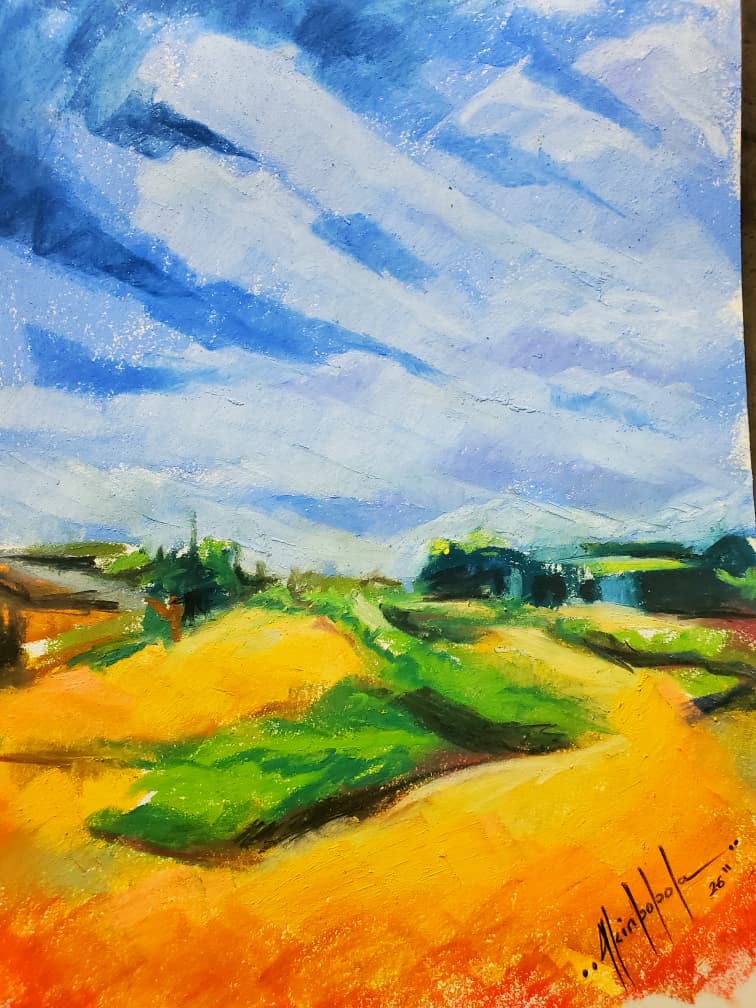
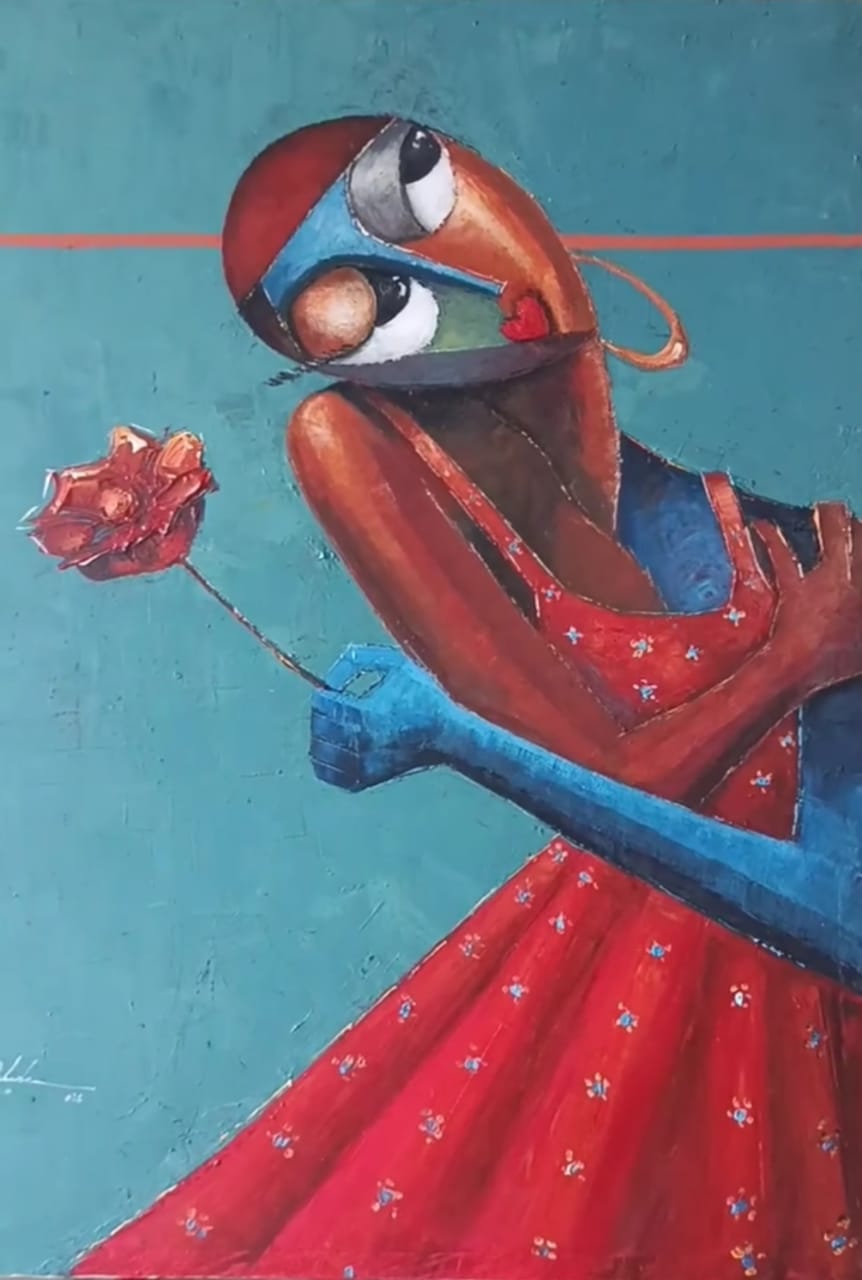
One of the exhibition’s strongest curatorial decisions lies in its refusal to reduce color to surface aesthetics. Throughout Afroblue, blue functions as atmosphere, archive, body, and metaphor. References to oceans, skies, indigo traditions, mourning, healing, dreams, and diasporic memory move fluidly across the exhibition space.
In many works, blue becomes less of a background element and more of an emotional terrain capable of carrying contradiction, vulnerability, displacement, and transformation.
This layered approach gives the exhibition a sense of openness. Rather than offering viewers a singular curatorial thesis, Afroblue unfolds through multiple visual and conceptual registers, allowing different artistic practices to coexist without collapsing into uniformity.
A Cross-Continental Dialogue Through Contemporary Practice
The exhibition includes artists working across a broad range of geographies, mediums, and artistic languages. Featured artists include Stacey Gillian Abe, Ifeoma U. Anyaeji, Gideon Appah, Moufouli Bello, Wim Botha, Bruce Clarke, Collectif Bogoké, Viyé Diba, Sokey Edorh, Abdoulaye Konaté, Kudzanai Violet Hwami, Oluwole Omofemi, Ghizlane Sahli, Maya-Inès Touam, and Barthélémy Toguo, among others.
Together, the artists create an interwoven dialogue around memory, migration, embodiment, spirituality, ecology, and representation.
For Nigerian artist Boluwatife Oyediran, whose work appears in the exhibition, blue becomes closely connected to ideas of Blackness, inversion, and interiority. His accompanying essay, On the Relationship between Blue and Inverted Blackness, introduces an additional intellectual layer to the exhibition by exploring how color can function as an extension of emotional and psychological experience within Black visual culture.
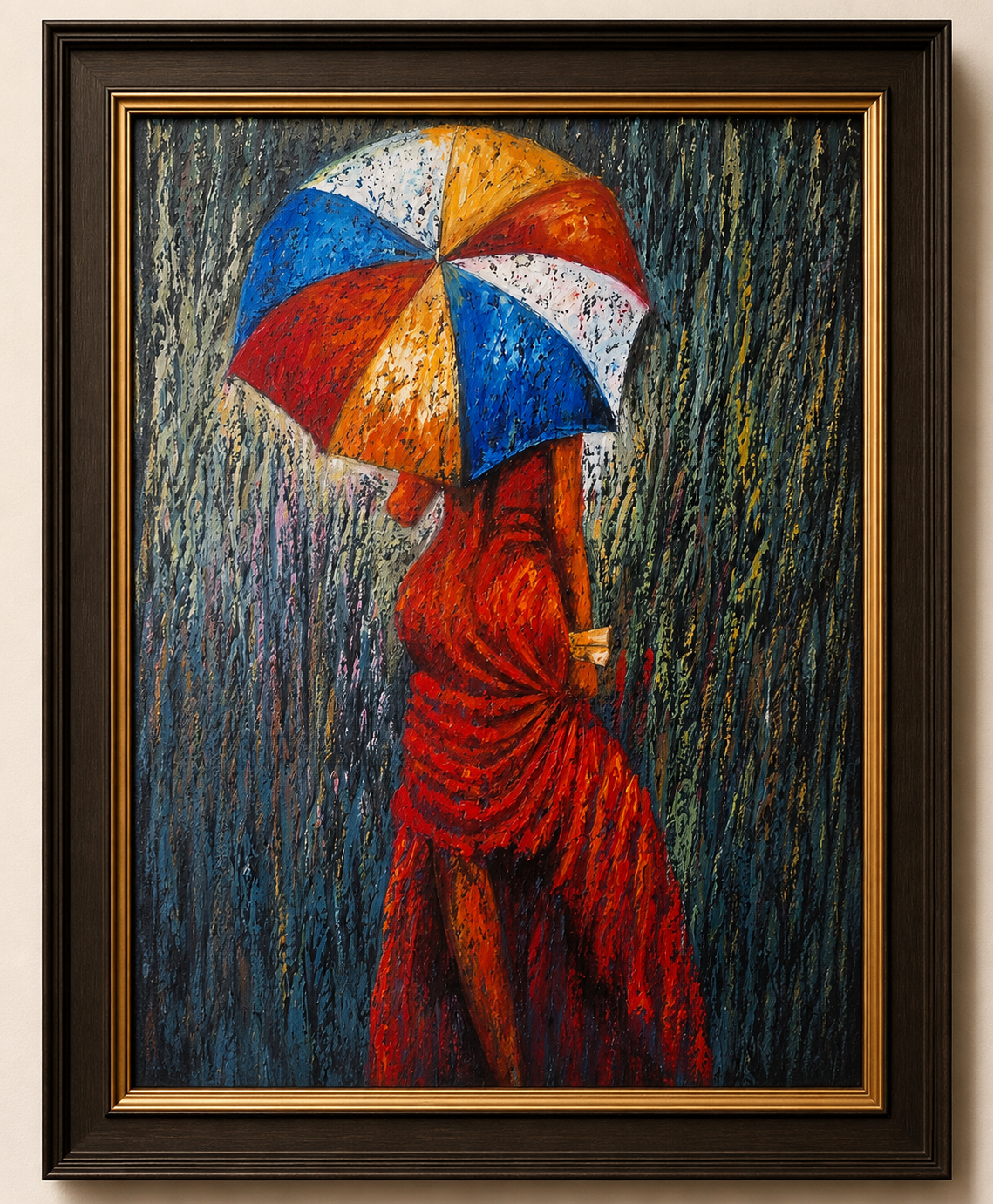
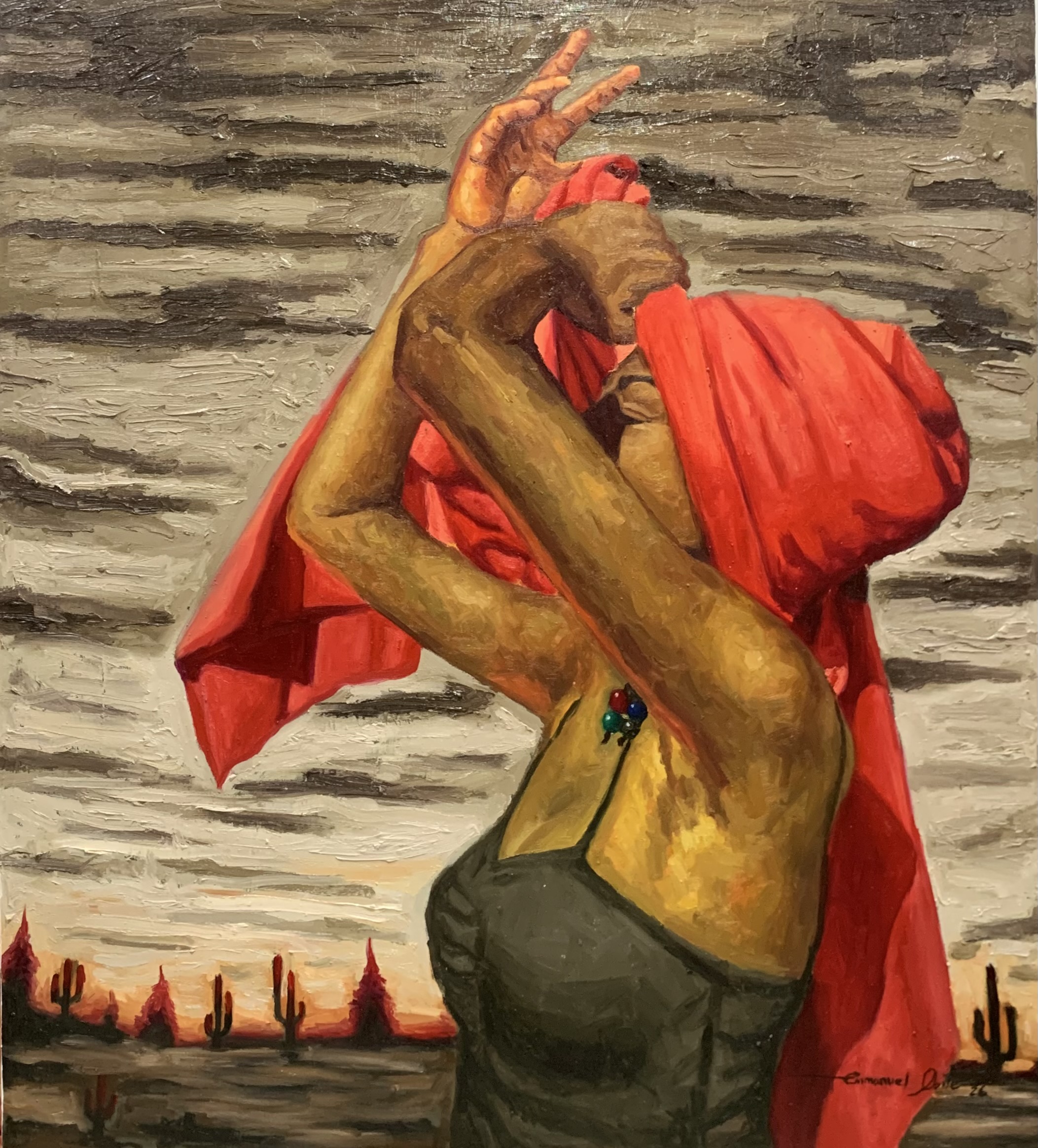
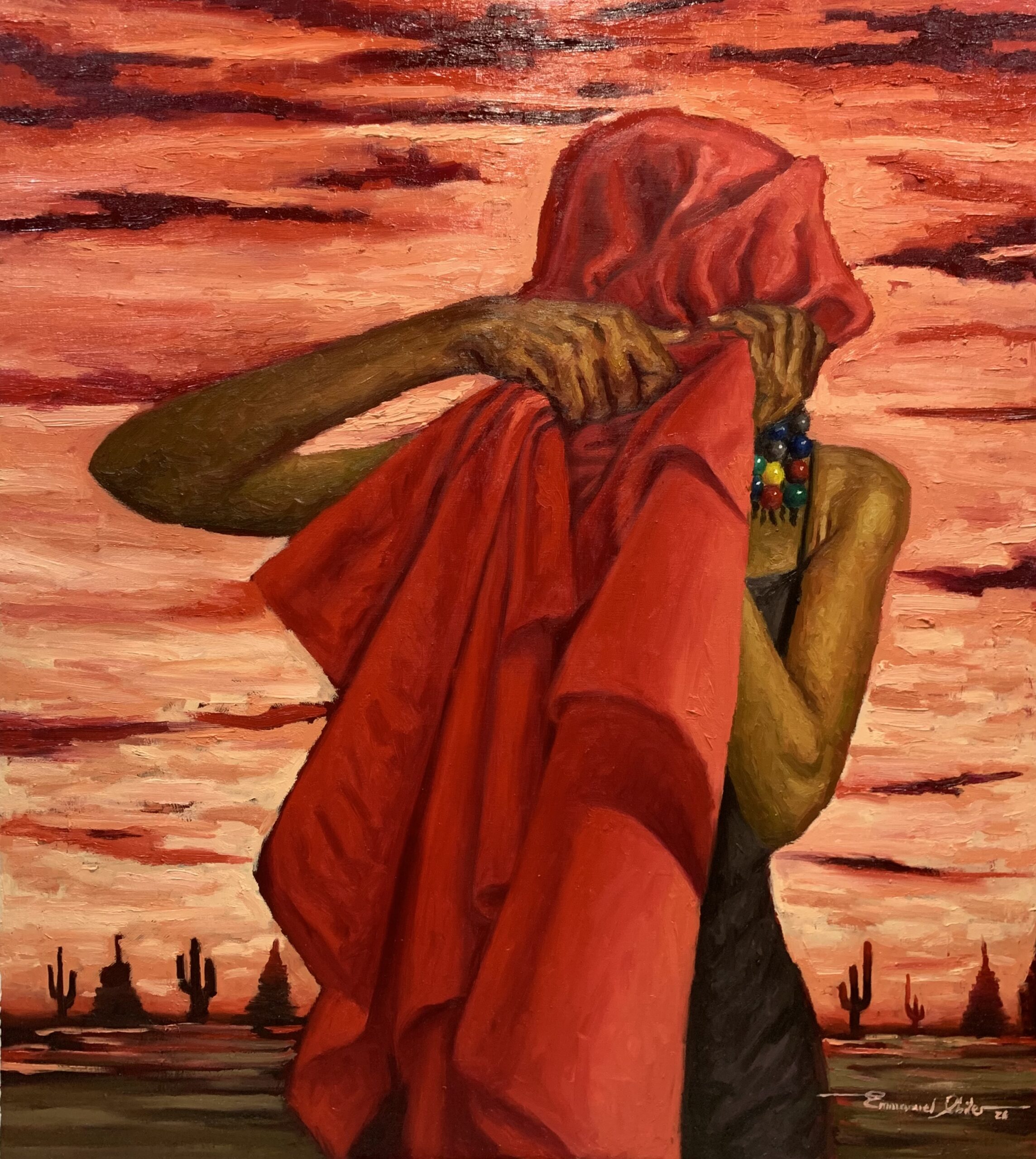
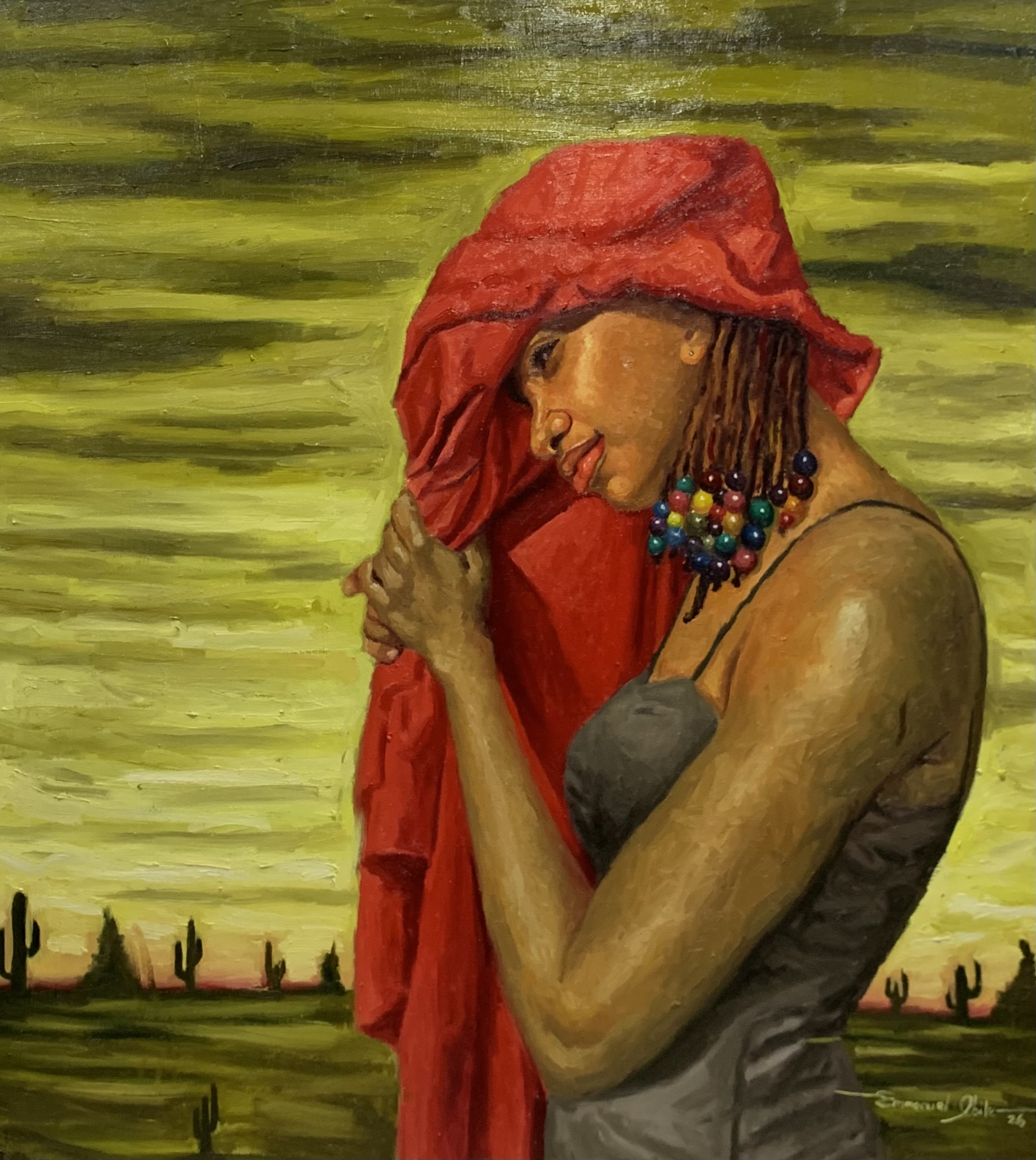
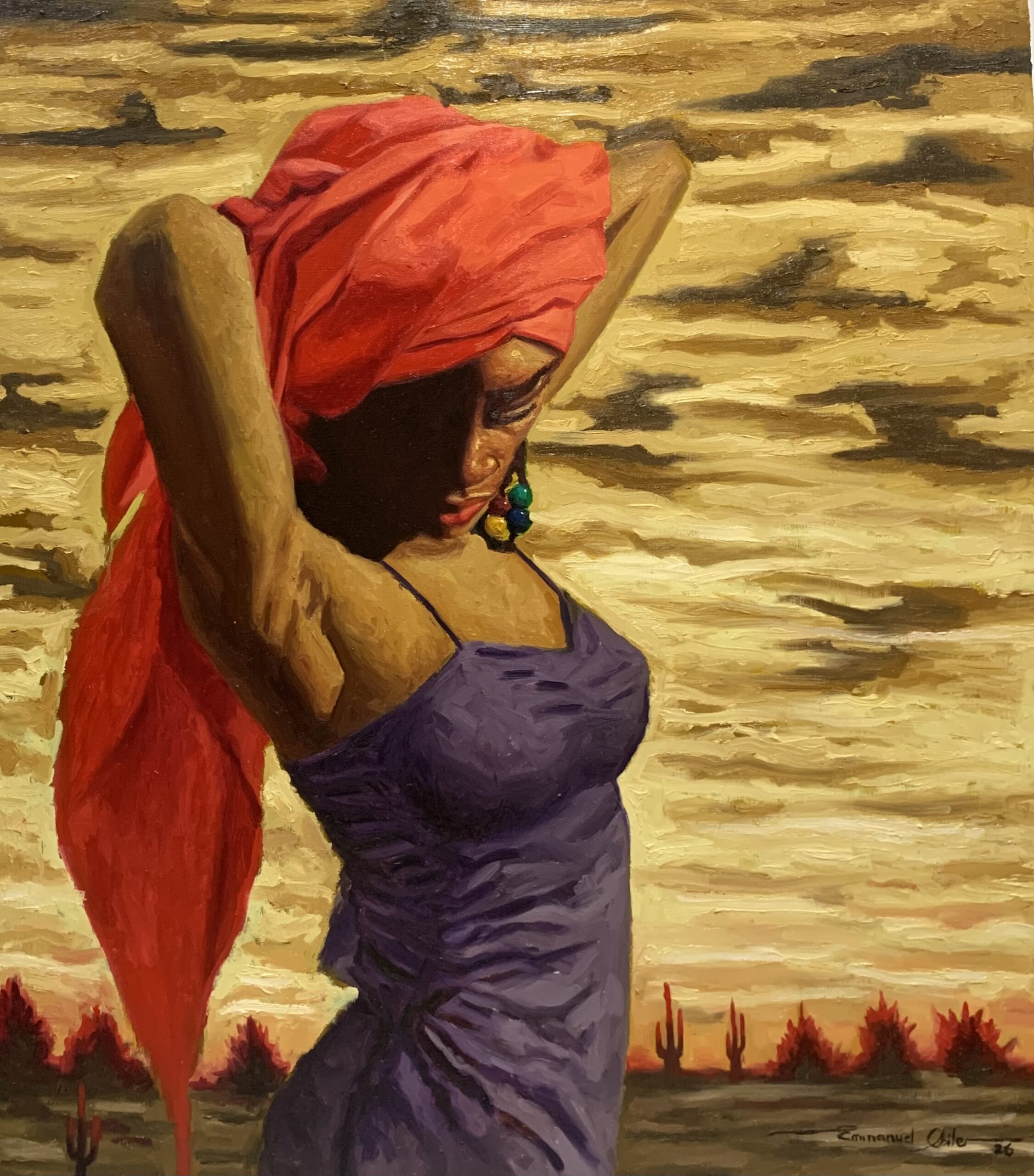
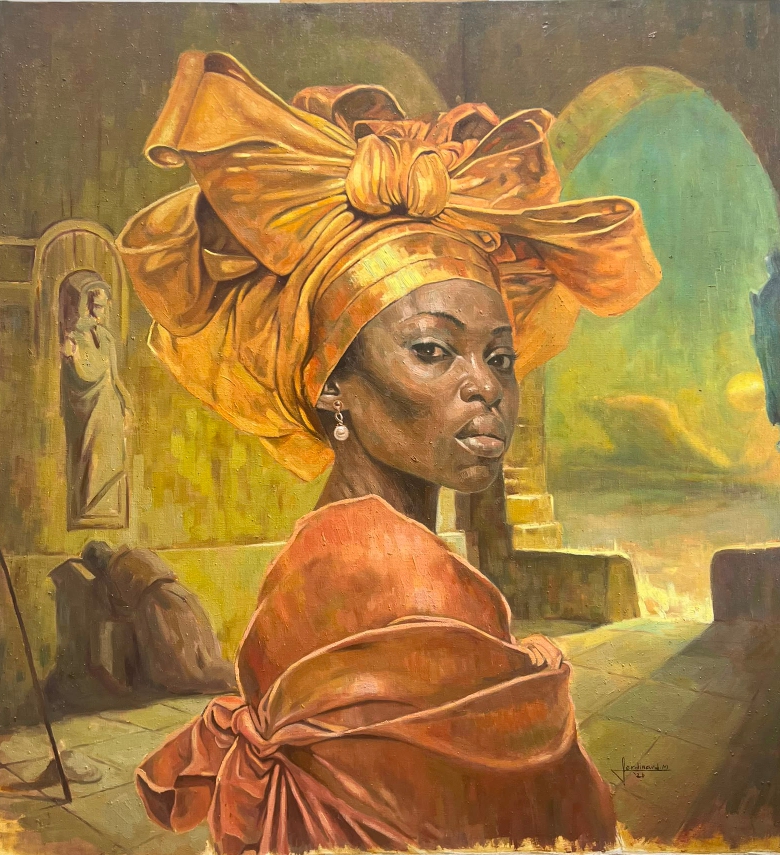
Elsewhere, Abdoulaye Konaté’s monumental textile-based works evoke political history and spirituality through layered abstraction, while Gideon Appah’s cinematic paintings create dreamlike spaces suspended between recollection and imagination. Kudzanai Violet Hwami’s figurative works bring psychological intensity and intimacy into the exhibition, while Oluwole Omofemi uses richly textured portraiture to explore emotional depth and representation.
The exhibition also foregrounds artists deeply engaged with material experimentation. Ghizlane Sahli’s sculptural assemblages made from recycled textiles and materials extend conversations around ecology, femininity, and craft traditions, while artists such as Ifeoma U. Anyaeji and Collectif Bogoké merge contemporary formal experimentation with historical and cultural references.
Spatial Experience and Curatorial Immersion
Upstairs, South African artist Wim Botha presents a site-specific installation created specifically for the exhibition. Known for sculptural works examining mythology, monumentality, religion, and language, Botha’s intervention expands the immersive quality of Afroblue and deepens its engagement with transformation and symbolism.
Importantly, the exhibition avoids overly didactic framing. Instead, visitors move through shifting emotional and conceptual atmospheres shaped by texture, materiality, sound, and color. Blue continuously transforms across the exhibition — becoming ocean and sky, silence and resistance, melancholy and possibility.
The curatorial framing describes blue as a “living material” explored “between sky and sea, blue bodies, ancient gestures and contemporary forms.” That description resonates strongly throughout the exhibition, where color becomes both connective thread and conceptual framework.
Fondation Blachère and the Expanding Landscape of Contemporary African Art
Founded by French collector and entrepreneur Jean-Paul Blachère, Fondation Blachère has long supported contemporary African art through exhibitions, residencies, and cross-cultural programming connecting artists across Africa, Europe, and the diaspora.
With Afroblue, the institution continues that trajectory through an exhibition that reflects the increasing complexity and global influence of contemporary African and diasporic artistic practices.
At a moment when African contemporary artists continue shaping some of the most urgent conversations within global contemporary art, Afroblue demonstrates how color itself can operate as a site of politics, history, imagination, and emotional memory.
More than a thematic exhibition centered on blue, Afroblue becomes a meditation on presence, displacement, tenderness, transformation, and the many ways contemporary artists continue expanding visual language across borders and histories.
Afroblue remains on view at Fondation Blachère, Gare de Bonnieux, France, through September 19, 2026.