Somali Rock Art: Understanding One of Africa’s Oldest Visual Traditions
by Glory Onyekwusi Nov 24, 2025
Rock art sites across Somalia and Somaliland offer some of the most significant early evidence of artistic expression in East Africa. These paintings, found in shelters and caves such as Laas Geel, Dhambalin, and Karin Heegan, provide insight into the pastoral cultures that occupied the region thousands of years ago. Their clarity, preservation, and variety make them an essential component of African visual history and a critical reference point for understanding the origins of art on the continent.
Archaeological Context and Dating
Somali rock art is challenging to date precisely due to the region’s climate and the absence of organic material in the pigments. However, stylistic comparisons and archaeological context suggest that many of the paintings at Laas Geel date to between 3,000 and 5,000 years ago, while some sites may be older. Dhambalin’s images, which include hunting scenes not seen elsewhere in the Horn of Africa, are typically dated to the first millennium BCE.
The paintings were created by early pastoralist communities who relied on cattle, sheep, goats, and camels. Their artworks offer a visual record of livestock importance, spiritual practices, and social life in the prehistoric Horn of Africa.
Major Sites and Their Characteristics
Laas Geel (Somaliland)
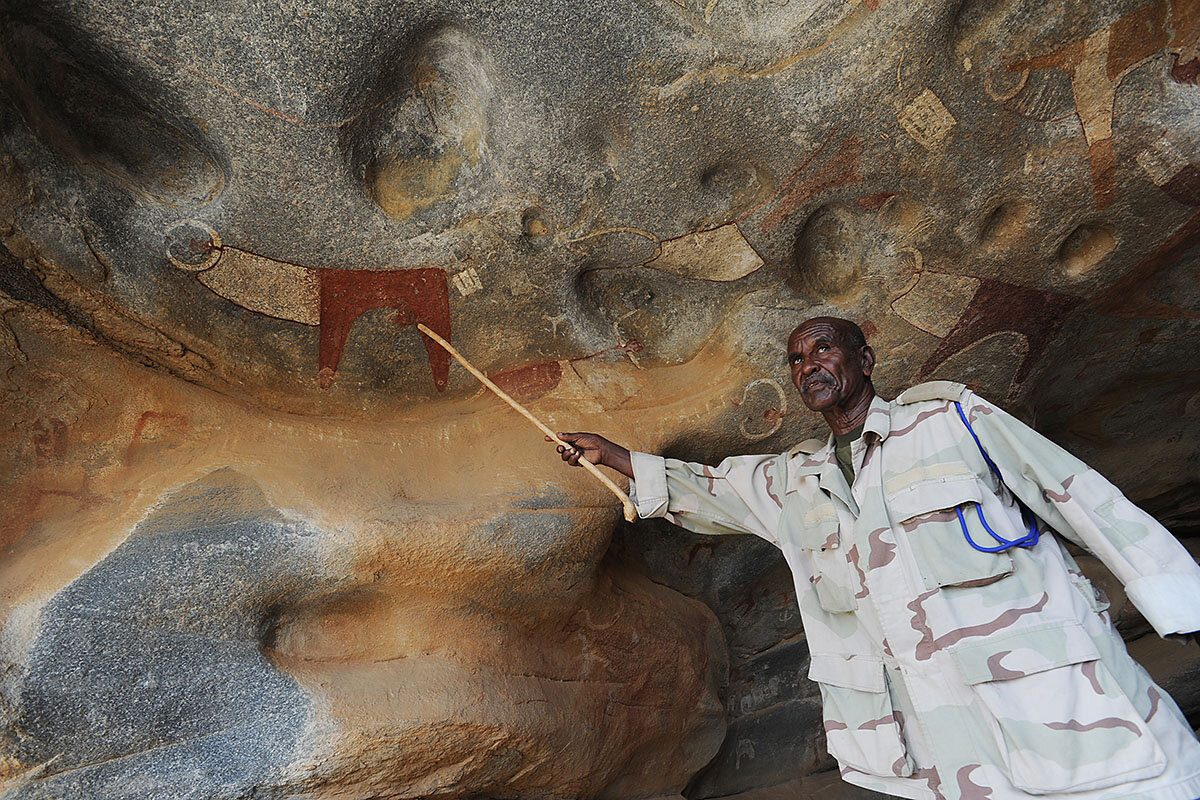
Laas Geel is the most widely known Somali rock art site due to its exceptional preservation. The paintings show long-horned cattle, human figures in ceremonial poses, and domesticated animals. The cattle are often depicted with highly stylized humps, udders, and body patterns, suggesting that livestock held ritual or symbolic significance. Humans are painted with raised arms, sometimes interpreted as gestures of worship or communal ceremony.
Dhambalin (Somaliland)
Dhambalin is notable for including both cattle and wild animals, such as antelopes and giraffes. It is one of the few sites in the Horn of Africa that depicts hunters using bows. The variety of scenes indicates a community engaged in both pastoralism and seasonal hunting. Its human figures are more detailed than those of Laas Geel, showing clothing, body markings, and movement.
Karin Heegan and Other Sites
Karin Heegan contains paintings of camels, which suggests a more recent date, as camels became widespread in the region later than cattle. Other sites across northern Somalia contain geometric shapes, handprints, and stylized fauna. Together, these sites represent a long timeline of artistic practice, showing how visual traditions evolved as communities adapted to environmental and economic changes
Artistic Methods and Materials
The artists used natural pigments derived from iron oxides, limestone, charcoal, and other minerals mixed with binders like animal fat or plant sap. Colors range from red, yellow, and white to darker tones. The application technique was likely simple, using fingers or primitive brushes made from plant fibers.
The clarity of the lines and the careful attention to proportion suggest that these paintings were not random markings. They were deliberate visual records created by skilled individuals who understood the importance of preserving cultural knowledge.
Cultural and Symbolic Interpretations
Although interpretations vary, most scholars agree that Somali rock art reflects key aspects of early pastoral life:
- Livestock as central to identity: The emphasis on cattle, especially cows with large humps and decorated bodies, points to the economic and symbolic value of herding.
- Ceremonial practices: Human figures with raised arms could represent ritual performances or collective gatherings.
- Social hierarchy: Differences in figure size and adornment may indicate roles within the community, such as leaders, spiritual specialists, or herders.
- Environmental memory: The presence of wildlife now rare or absent in the region (e.g., giraffes) suggests a different ecological landscape in antiquity.
These images serve as a visual archive, capturing shifts in climate, livelihood, and belief systems over thousands of years.
Thumbnail source :
- Photographer: Scott Peterson
- Source: The Christian Science Monitor / Getty Images